Transform an Avoidant Relationship Without Chasing
A step-by-step roadmap to turn distance with an avoidant into calm, steady connection.

Does it feel like the harder you try to fix things, the more your avoidant partner pulls away?
You try to talk things through calmly. You explain how you feel. You try not to blame them. You try to be patient.
But somehow the conversation always ends the same way. They go quiet, change the subject or shut down.
And you’re left feeling hurt, confused and emotionally drained.
I know this because I’ve lived it.
Love Isn’t the Problem
You love them deeply and you really want this to work. The thought of losing them is unbearable.
Because when things are good between you, they feel really good. But sooner or later they pull away again and it all feels uncertain again.
And living in that push-pull cycle really takes a real toll on you. It drains your energy, your focus, your health and your confidence.
And if nothing changes, sooner or later the relationship will break under that pressure. Because even the deepest love can’t survive that push-pull dynamic forever.
I’ve seen it happen time and time again. Couples who love each other deeply torn apart by a dynamic that keeps repeating until something finally gives.
And not only does it slowly break the relationship…
It slowly breaks you down too.
You start shrinking yourself, walking on eggshells and second-guessing everything you say.
You lose your focus at work because your mind is constantly spinning and trying to figure out a way forward.
You feel constantly on edge, wondering when the next pull-away will happen, and you stop trusting your instincts.
You feel lonely even when you’re together and that becomes your new ‘normal.’
You carry the emotional weight of the relationship pretty much entirely on your own.
And if nothing changes, not only does the relationship collapse, but you come out the other side feeling like a shell of who you once were.
But There is a Way Out
I have good news for you.
Once you understand what’s really happening beneath the surface, the situation becomes much less confusing and much more solvable.
Because there are ways of navigating this dynamic that build connection instead of triggering distance. Even without chasing.
And when you start approaching the relationship differently, something surprising often happens.
The tension between you begins to settle, conversations become much easier and the relationship starts to become much more stable.
Finally, the relationship no longer has to feel like a constant emotional rollercoaster. Instead, it starts feeling secure, connected and emotionally safe.
The Real Reason Everything You've Tried Hasn't Worked
Up until now, you might have been told things like:
“Just communicate more.”
“Show them how much you care.”
“Be patient and they’ll eventually open up.”
“Just give them space.”
“If they love you, they’ll change.”
The problem is, avoidant attachment operates very differently from most relationship dynamics.
So the advice that works elsewhere often backfires here. It can actually trigger the exact distance you're trying to prevent.
Which is why so many people feel like the harder they try, the worse things get.
This isn’t about trying harder. And it’s not about learning to communicate “better” in the traditional sense.
What changes everything is learning how to build connection using approaches designed specifically for avoidant attachment.
Who I Am & Why I Know This Works
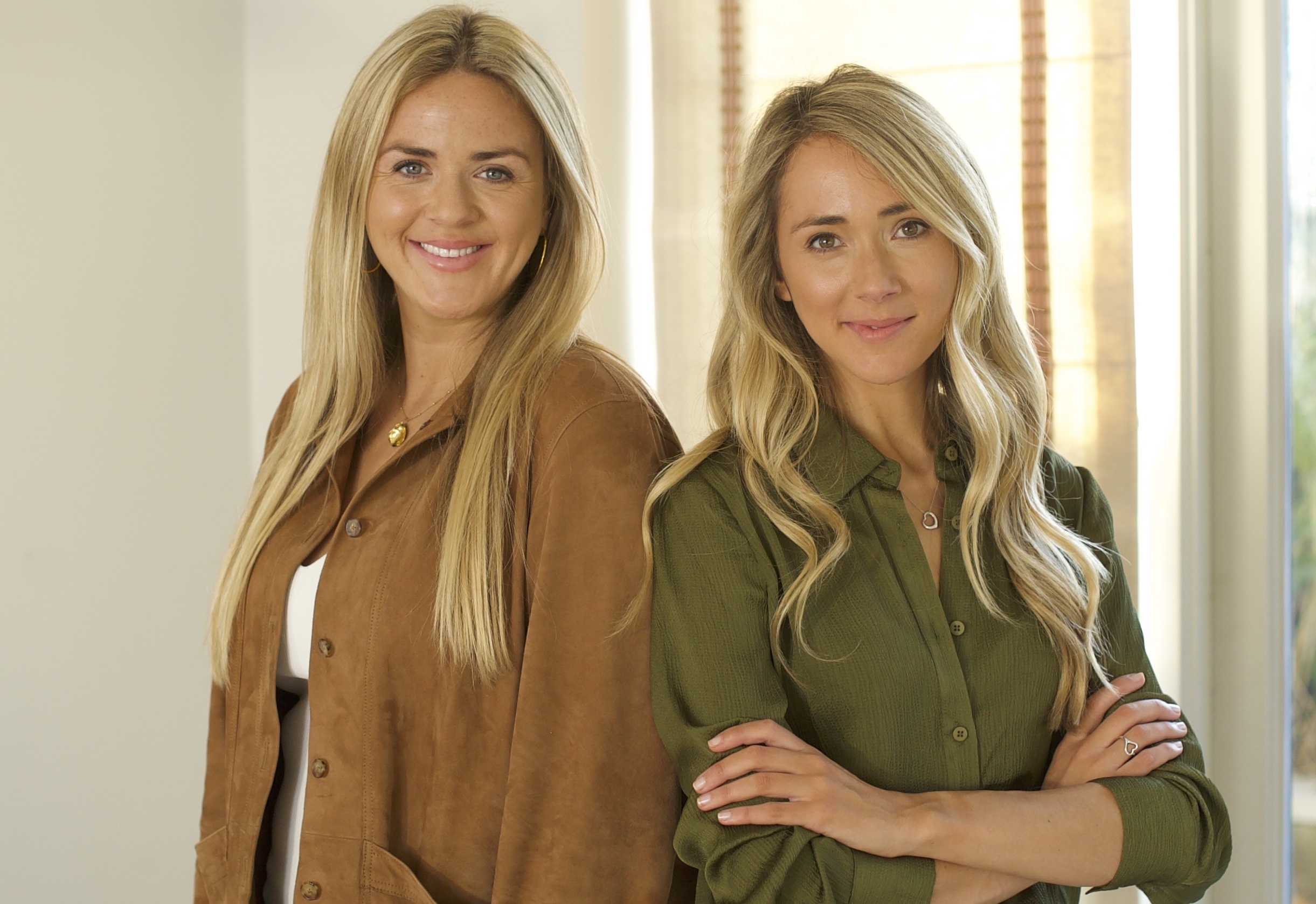
My name is Louella Alderson. I’m a relationship expert who has been featured hundreds of times in leading publications around the world.
I’m also married to an avoidant. We have a toddler together and I honestly couldn’t be happier.
Our relationship is peaceful, connected and stable. But it hasn’t always been that way.
For years, we were stuck in the same push-pull cycle many people experience with avoidant partners. There were periods of closeness followed by distance.
He would shut down and I’d get frustrated. After days of silence, he’d message me something like “hey”. It would drive me crazy!

At times, I felt hopeless about how we would ever make it work. It felt like no matter how hard I tried, nothing changed.
During this time, my sister Jess and I started building a dating app together.
As we immersed ourselves in the world of relationships, personality and attachment psychology, everything started to make a lot more sense.
We grew our dating app to hundreds of thousands of users and suddenly publications around the world like Forbes, Men’s Health, Vice, and Business Insider were knocking on our door.
And as we learned more about attachment and relationship dynamics, my own relationship began to transform.
I started responding differently and suddenly, situations that once felt impossible to navigate finally started to make sense.
Today, our relationship is stronger than I ever thought possible.
And the methods that helped transform my relationship are the same ones we now share with people navigating relationships with avoidant partners.
People who apply these principles often notice things like:
Conversations become calmer and much more productive.
The push–pull cycle begins to settle.
Your avoidant partner becomes more open over time.
Moments that used to trigger distance begin leading to connection instead.
The relationship feels much more stable and connected.
Difficult conversations stop escalating into complete shutdowns.
You stop feeling like you’re the only one carrying the relationship.
That gut-wrenching feeling of uncertainty begins to fade.
The Solution: A Roadmap Designed Exactly for Avoidant Relationships
Now here's the part where everything changes.
Because you don’t need to chase harder. You need to change how you respond to the dynamic.
A lot of people in avoidant dynamics feel powerless but that’s not true.
Because a relationship isn’t just you and them. It’s a third entity. A system. And every interaction shapes it.
Think of it like two people sailing a boat. One person steers. The other manages the sails. If you change either one, the whole course shifts.
What you say. How you respond. The way you show up. All of it shapes the outcome.
Avoidant attachment follows a very specific pattern and once you know how to navigate it, you can start building connection without triggering distance.
You don’t need more generic relationship advice. You need practical techniques that actually work with avoidants.
INTRODUCING
Transform an Avoidant Relationship Without Chasing
A step-by-step roadmap to turn distance with an avoidant into calm, steady connection (easy-to-follow tutorial videos you can do at your own pace).
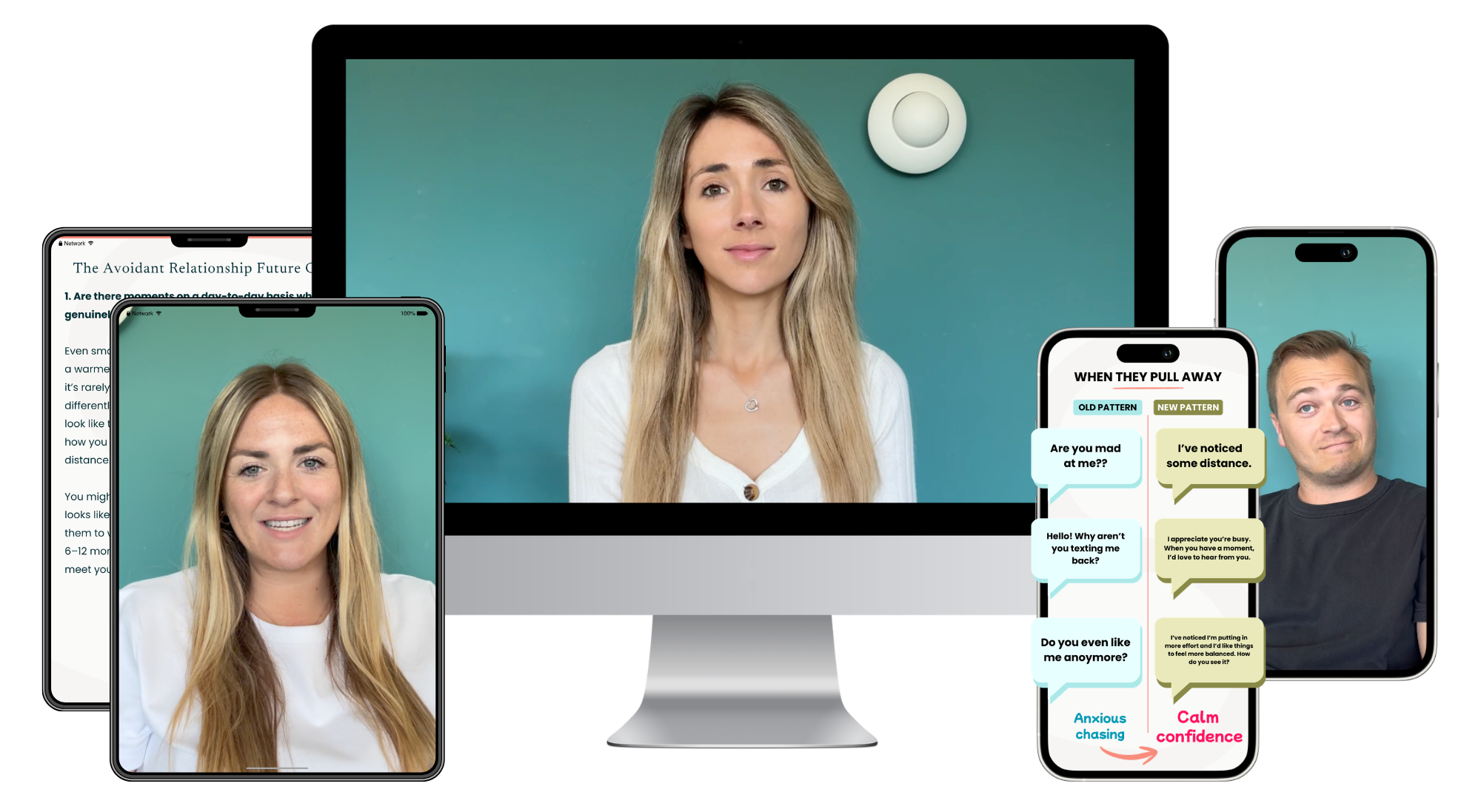
It’s designed for people who want clear, practical techniques that will change the dynamic…fast.
Here’s what’s included:
Everything you need to understand avoidant behavior so you can stay grounded when they pull away and know exactly how to respond to break the painful cycle.
9 simple yet powerful communication techniques to stop triggering shutdown and start building real connection (even when things feel tense or uncertain).
How to avoid the number one mistake people make to try to “keep the peace” that actually pushes an avoidant further away.
The 3 foundational rules that turn instability into security (it's impossible to build a secure relationship without them).
Learn how to deal with insecurities before they eat away at you and sabotage the relationship.
The exact 5 factors that determine whether an avoidant will come back after pulling away (and how to influence them without chasing).
The one-minute nervous system technique to calm your body fast when everything feels like too much and you can't stop spiraling.
5 simple shifts to help an avoidant feel secure so the connection feels calm and steady instead of unpredictable and fragile, without carrying it all on your own.
6 practical strategies you can use immediately to create emotional safety on both sides and rebuild connection (it’s win-win).
Understand the psychology of how avoidants experience physical intimacy so you don’t take it personally or blame yourself.
The one thing you need to do in the long run if you want this relationship to last and feel secure (this directly impacts an avoidant’s attachment patterns over time).
[BONUS] An intimate, in-depth interview with an avoidant and his wife (our co-founder, Lou) where he explains exactly what’s happening in his mind during silence, what makes him withdraw and what builds attraction. You’ll see a real example of how their relationship went from shutdown and disconnection to healthy and secure.
[BONUS] An exclusive interview where Lou shares the real turning points in her relationship, including how she handled distance with self-trust, approached exclusivity in a way that led to commitment within days and built a strong, emotionally secure partnership.
Plus, You're Covered By Our 30-Day Money-Back Guarantee
Try the course. Go through all 5 modules. Actually implement the techniques.
And if you don’t see a change in your avoidant dynamic…
Just email us within 30 days and we’ll give you a full refund.
Because we know this works.
We've seen it work for too many people to have any doubt.
Which is why we're shouldering all the risk. You risk nothing.
If your relationship doesn’t improve, you don’t pay.
And if it does, you finally get a calm, secure connection with the person you love.
2
relationship experts & sisters!
5,708
successful matches
11 million
people supported worldwide
6
years in business
FAQs
How long until I see a change?
You can start seeing changes as soon as you begin applying the techniques.
If you start applying them tomorrow, you can see changes tomorrow.
Even small shifts in how you respond can quickly change the tone of interactions with an avoidant partner.
What if I’ve already tried everything to fix this dynamic?
Most people who do this course have already tried communicating more, being patient or giving space.
Most of the usual relationship advice doesn’t work with avoidant attachment and can even make the dynamic worse.
This course teaches approaches designed specifically for avoidant relationships.
We just broke up. Will this help me get them back?
This course is primarily designed for people who are currently in a relationship with an avoidant partner.
But if you do start talking again, it will help create much better conditions for the relationship to work out.
Will this work if the avoidant has blocked me?
It's primarily for people who are in contact with their avoidant partner.
But what I would say is that if you have a genuinely strong connection, there’s a real likelihood that the avoidant will come back.
This course prepares you to respond differently when or if that happens.
If you’re serious about making this relationship work, I’d strongly suggest learning this now rather than waiting.
Will this work if my partner is very avoidant?
Yes, this course is designed for the whole range of avoidance.
My partner was one of the most avoidant people I’ve ever met and it worked with him.
If you’re here, you already know the current dynamic isn’t working and waiting might cost you the relationship.
The real question is whether you’re ready to approach it differently.
You can keep walking on eggshells and hoping the next conversation goes differently.
Or you can learn how to navigate this dynamic so the relationship actually has a real chance of becoming what you want it to be.